Façade work (brickwork, cladding, curtain wall, insulation, render, glazing and repairs) needs people and materials at height for weeks or months. There are three main ways to get them there: fixed scaffolding, a mast-climbing work platform (MCWP), or an electric suspended platform (often called a cradle or suspended scaffold). Each one is the best choice for some projects and the wrong choice for others.
This guide compares the three on the criteria that drive the decision: load, height, façade length, speed, set-up, building interface and standards. We use the published data for SEKLIFT’s MCWP and suspended-platform range as reference points.
The three systems in one sentence each
- Scaffolding: a fixed, tied tube or system structure covering the façade, with a working deck at every lift.
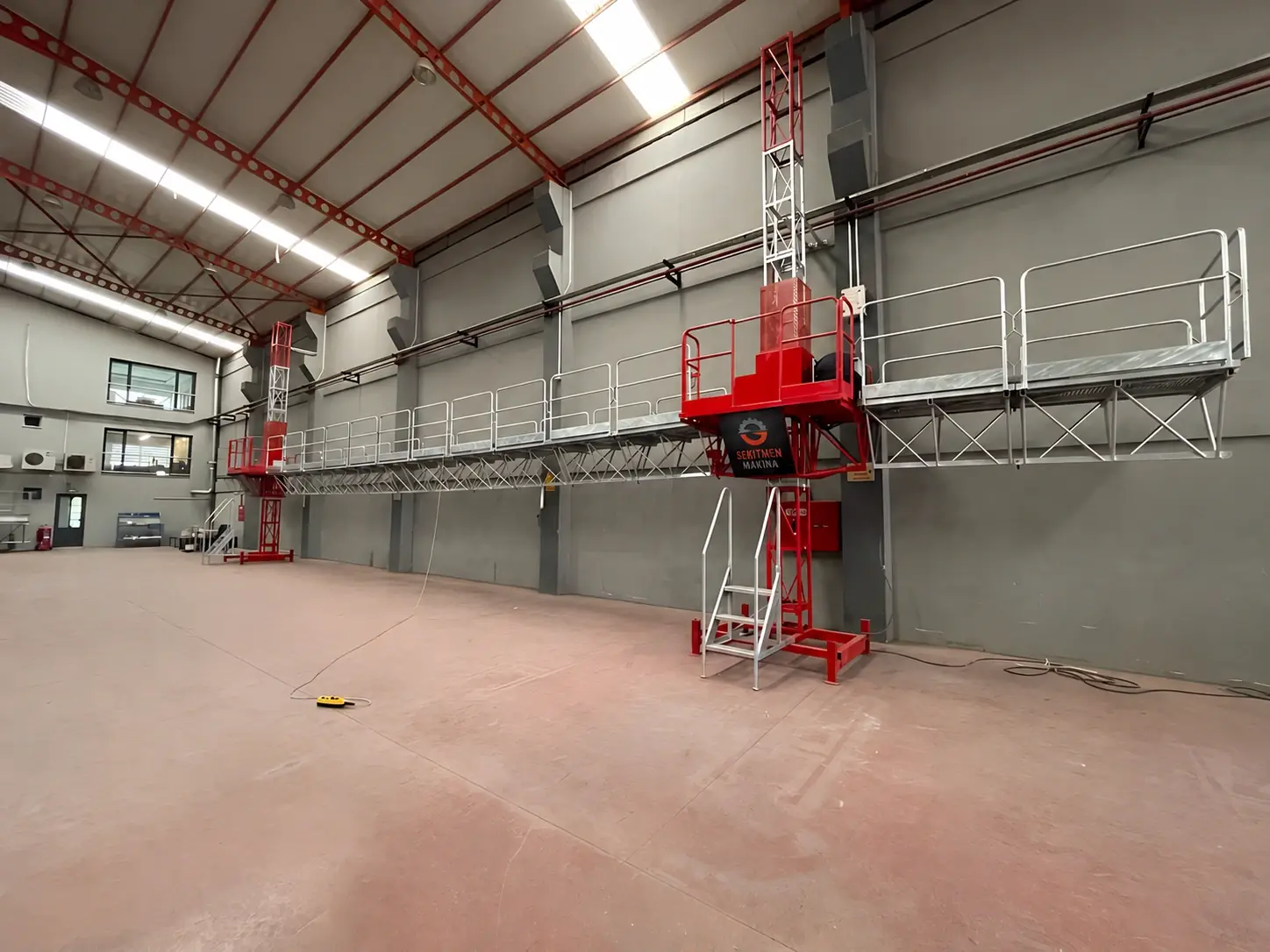
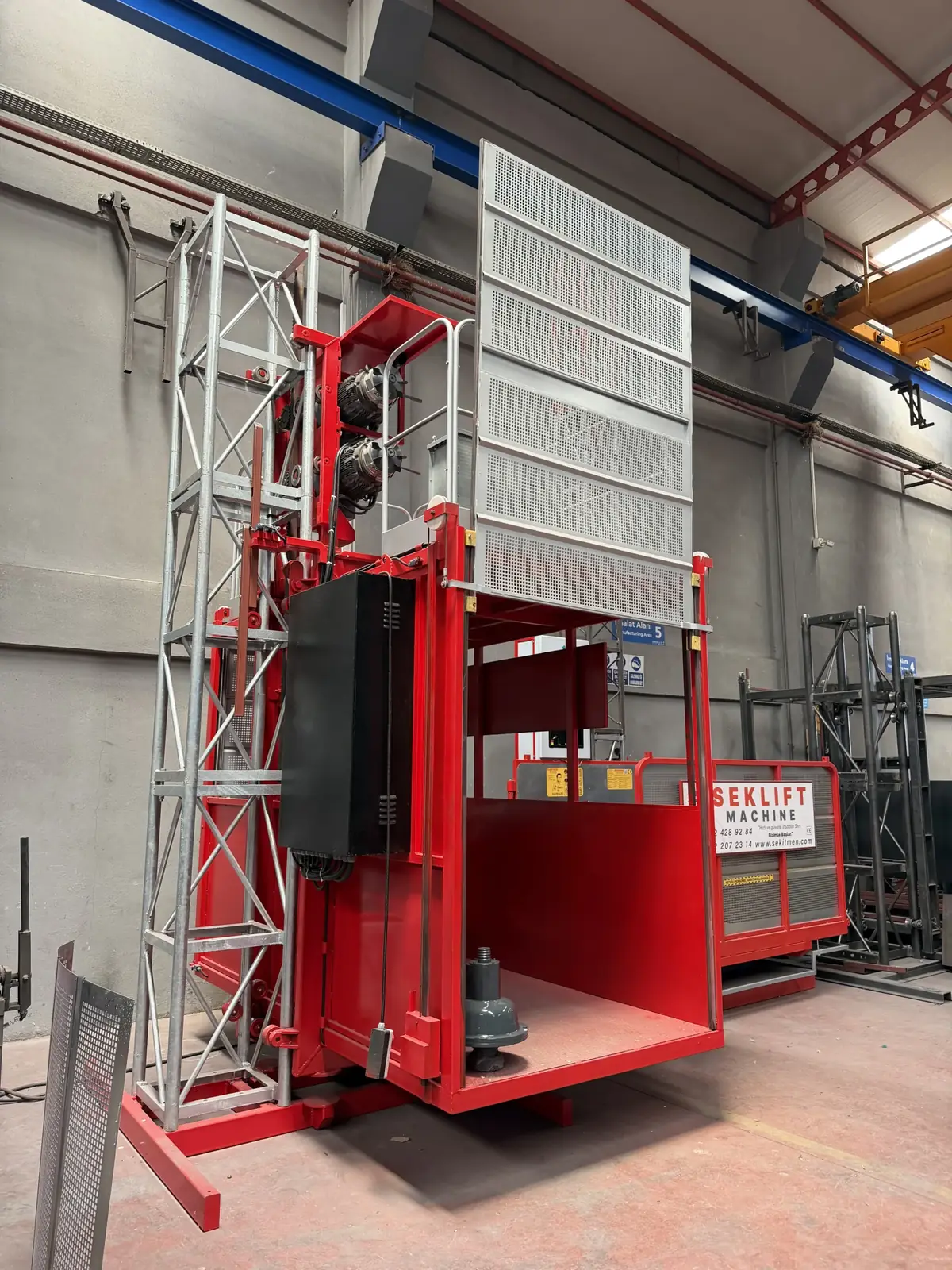
- Mast-climbing work platform (MCWP): a platform deck that climbs one or two vertical masts by rack and pinion, standing on the ground and tied to the building.
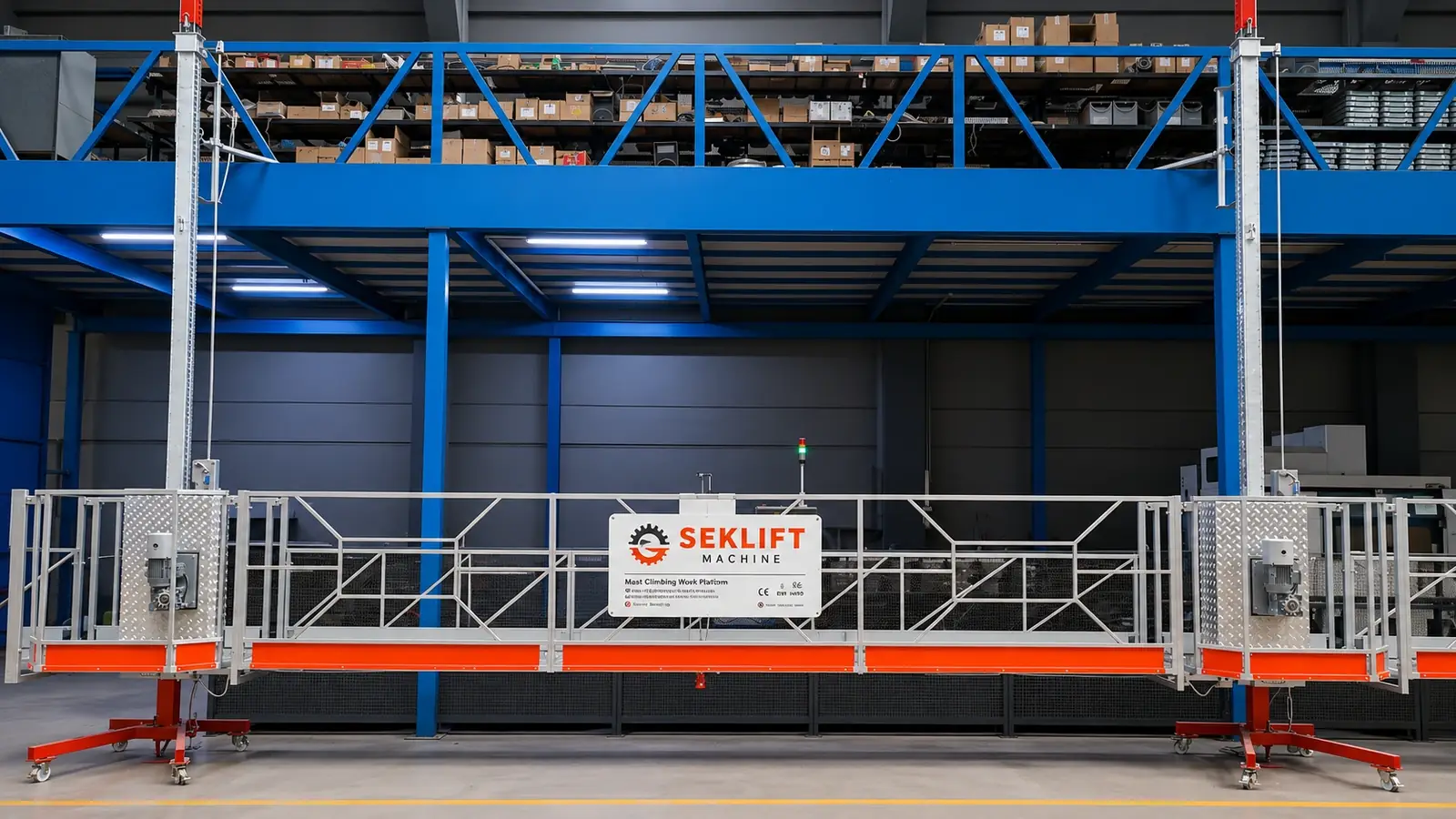
- Suspended platform: a light platform hanging on wire ropes from roof-mounted suspension rigs, raised and lowered by electric traction hoists.
Side-by-side comparison
| Criterion | Scaffolding | Mast-climbing work platform | Suspended platform |
|---|---|---|---|
| Typical load on deck | Light per bay (per scaffold class) | High, up to ~2,000 kg on one deck | Moderate, typically a few hundred kg |
| Height | Practical limits rise quickly in cost and time | Very high (100 m+ with ties) | Very high, limited by rope length and roof rig |
| Façade coverage | Entire façade at once | One deck section, moved up and down | One drop at a time, re-rigged sideways |
| Set-up | Long; erected lift by lift | Medium; base + masts + ties, then climbs | Fast; roof rig + ropes + platform |
| Ground footprint | Full length of façade | Base at each mast | None at ground (needs a roof) |
| Roof access needed | No | No | Yes, plus structural roof capacity or counterweights |
| Building interface | Many tie points | Mast ties at intervals | Roof suspension points or parapet clamps |
| Moving people and materials vertically | Separate hoist needed | Deck moves with crew and materials | Platform moves with crew and light materials |
| Ergonomics | Fixed lifts; work height may not suit | Deck stops at any height; ideal working level | Any height; platform can sway |
| Best for | Complex geometry, low-rise, long duration, many trades at once | Heavy cladding, brick, stone, curtain wall on mid- and high-rise | Maintenance, repairs, painting, glazing, light façade work |
| Main standard (EU) | EN 12811-1 | EN 1495 | EN 1808 |
When a mast-climbing work platform wins
A mast climber is a heavy-duty, adjustable-height workbench. The whole crew and their materials ride up together on one deck, and they can stop at exactly the right height for each course of brick or cladding panel. It’s the strongest choice when:
- loads are heavy: stone, brick and precast panels, curtain-wall units;
- the façade is long and flat, so a twin-mast deck can cover a wide bay;
- the building is mid- or high-rise, where scaffolding becomes slow and expensive;
- you want to reduce crane time by bringing materials up on the deck.
SEKLIFT MCWP range: published data
| Model | Configuration | Rated load | Platform | Height | Speed / drive |
|---|---|---|---|---|---|
| SM-SK-101 | Single mast | 2,000 kg | 4.2–10 m long | 135 m standard; up to 300 m project-based | 2 × 3 kW; max. 8 kVA; 400 V |
| SM-SK-102 | Twin mast | up to 2,000 kg | up to 30 m wide | up to 200 m | 0.14 m/s; parachute safety brake; tilt sensor |
| SM-SK-103 | Compact twin mast | 750 kg at 11.5 m | 11.5 m max. length | 40 m | 3.5 m/min; 3 kW; 380 V |
Allowable load varies with platform length and load distribution. Final values are confirmed for the selected configuration and anchoring layout. Why position matters as much as kilograms is explained in Can a lighter load put more stress on a mast climber?
SM-SK-101 and SM-SK-102 are covered by an EC type-examination certificate to EN 1495 (see Certifications).
Watch-outs: MCWPs need a firm base and foundation at each mast, tie points on the structure, and a planned sequence for extending masts. Twin-mast decks need both masts to stay synchronised, which is why level (tilt) monitoring matters.
When a suspended platform wins
A suspended platform needs nothing at ground level and can be rigged in hours, which makes it the go-to choice for:
- maintenance and repair on finished buildings: sealants, glazing replacement, painting, cleaning;
- façades over streets, canopies or podiums, where ground-based systems can’t stand;
- short jobs where scaffold erection time would exceed the work itself;
- moving along the façade drop by drop.
SEKLIFT SM-GAP-101 electric suspended platform: published data
| Parameter | Value |
|---|---|
| Rated load | 500 kg |
| Drive | 2 × 1.1 kW traction hoists |
| Speed | 0.15–0.2 m/s (9–12 m/min), depending on the hoist motor configuration chosen for the project |
| Supply | 380 V |
| Platform lengths | 1.5 / 3 / 4.5 / 6 m (modular) |
| Wire ropes | 10 mm, 6×19 construction |
| Controls | Wired up/down control |
| Protection | Limit switches, overload protection, dual safety system |
| Assembly | Approx. 1 hour (platform), per catalogue |
The SM-GAP-101 holds an EC type-examination certificate to EN 1808.
Watch-outs: the roof must take the suspension loads, either through structural anchor points or a counterweighted outrigger system checked for the roof slab. Platforms sway in wind and can’t carry the heavy loads a mast climber can. Every suspended platform also needs an independent secondary (safety) rope system, and workers need fall-arrest equipment as the instructions require.
For permanent façade maintenance on finished buildings, a building maintenance unit (BMU) or a dedicated façade-access platform is often the better long-term solution. See Façade access & BMU systems.
When scaffolding still wins
Scaffolding remains the right answer for:
- complex geometry: curved façades, deep balconies, many setbacks;
- low-rise buildings where a mast or roof rig adds little;
- work needing simultaneous access to the whole façade by several trades;
- long-duration works where the scaffold also serves as edge protection and a debris barrier.
Its costs grow with height and surface area (erection, adaptation, ties, hire time), and it doesn’t move materials vertically. A separate hoist is usually needed: see how a rack-and-pinion construction hoist works.
Quick selection guide
| Your project | Usually best |
|---|---|
| 12-storey residential, brick façade, heavy pallets | Mast-climbing work platform (twin mast) |
| Office tower, unitised curtain-wall panels | MCWP or crane-fed installation from floors |
| Glazing replacement on an occupied 20-storey building | Suspended platform |
| Painting and sealant renewal, building over a busy street | Suspended platform |
| 3-storey heritage building with ornate façade | Scaffolding |
| 6-storey building, render + insulation, 40 m façade | Compact MCWP or scaffolding, depending on duration |
What to send for a recommendation
Façade height and length, geometry (setbacks, balconies, curves), work type and heaviest load per lift, roof access/structure (for suspended platforms), ground conditions at the base (for MCWPs), power supply, and programme duration.
Ask for a façade-access recommendation → · Mast-climbing work platforms · Electric suspended platforms · Technical resources
Frequently asked questions
What is the difference between a mast climbing work platform and scaffolding?
Scaffolding is a fixed structure covering the façade, with decks at set levels. A mast climbing work platform is one powered deck that climbs masts by rack and pinion. It carries the crew and heavy materials together and stops at any working height.
Is a mast climber faster than scaffolding?
On mid- and high-rise façades, usually yes. There’s far less structure to erect, the deck moves to the work, and materials ride with the crew. On low-rise or complex façades, scaffolding can still be quicker overall.
How much weight can a mast climbing work platform carry?
It depends on the model and deck length. SEKLIFT’s SM-SK-101 and SM-SK-102 are rated up to 2,000 kg, and the compact SM-SK-103 carries 750 kg at 11.5 m.
When should I use a suspended platform instead of a mast climber?
Use one when there’s no suitable ground base, the work is light (maintenance, glazing, painting), or the job is short. It needs a suitable roof for the suspension rig.
Which standards apply to MCWPs and suspended platforms in Europe?
EN 1495 for mast-climbing work platforms, EN 1808 for suspended access equipment, and EN 12811-1 for scaffolding. All of them sit within the EU machinery and work-equipment framework.
Send us the building height, façade length, loads and programme. We will recommend a mast-climbing platform, suspended platform or a combination.
Compare SEKLIFT access platforms →Sources
- SEKLIFT, Product Catalogue 2026: SM-SK-101, SM-SK-102, SM-SK-103 and SM-GAP-101 data; seklift.com/technical-resources (checked 2026-11-05).
- SEKLIFT, Certifications: EC type-examination certificates (EN 1495, EN 1808).
- CEN, EN 1495:1997+A2:2009 Lifting platforms — Mast climbing work platforms (the edition named on SEKLIFT’s EC type-examination certificate CAC-M-0001-1).
- CEN, EN 1808:2015 Safety requirements for suspended access equipment.
- CEN, EN 12811-1 Temporary works equipment — Scaffolds — Performance requirements and general design.
- HSE, LOLER (UK in-use requirements for lifting equipment, including MCWPs and suspended platforms).