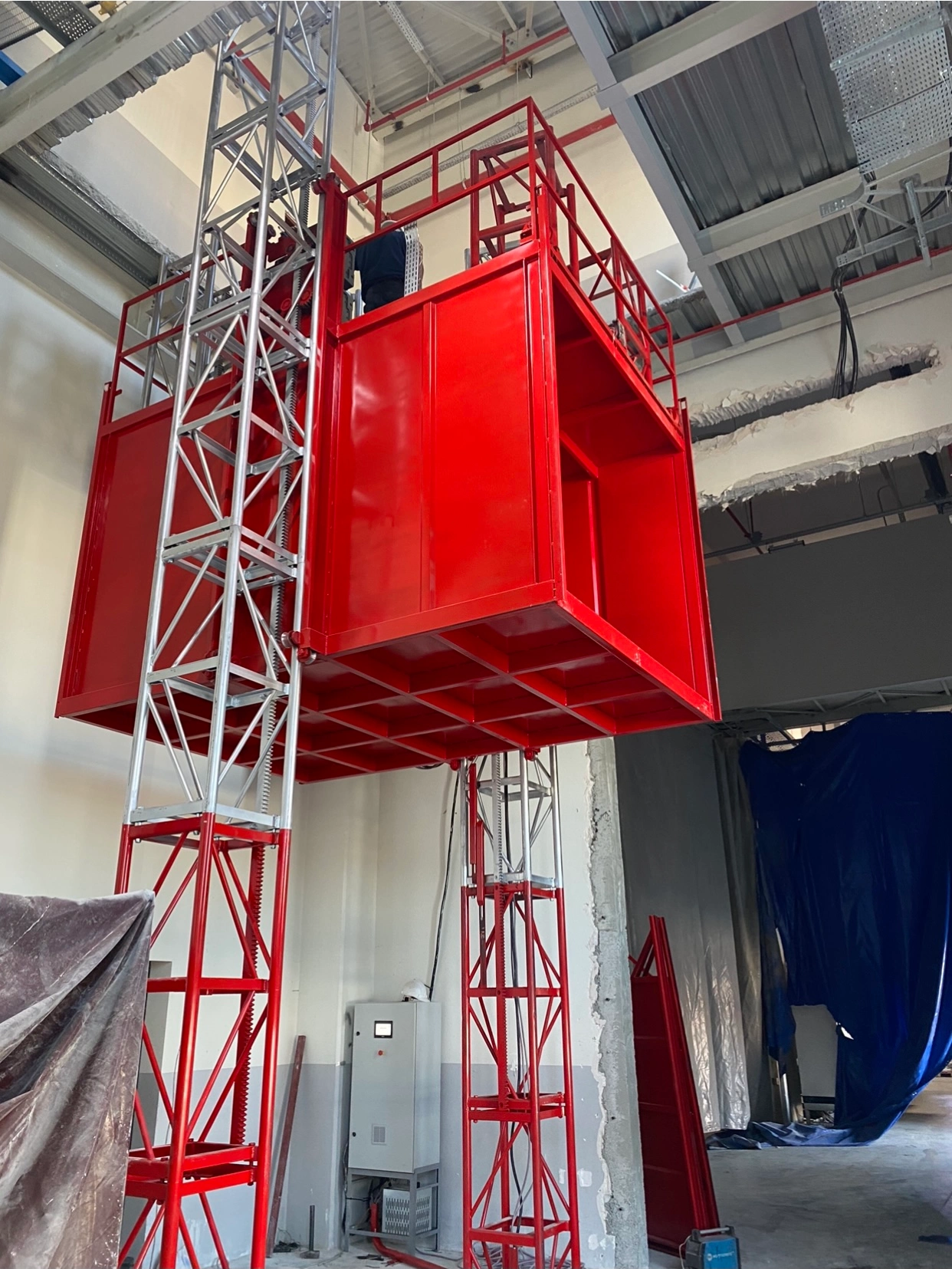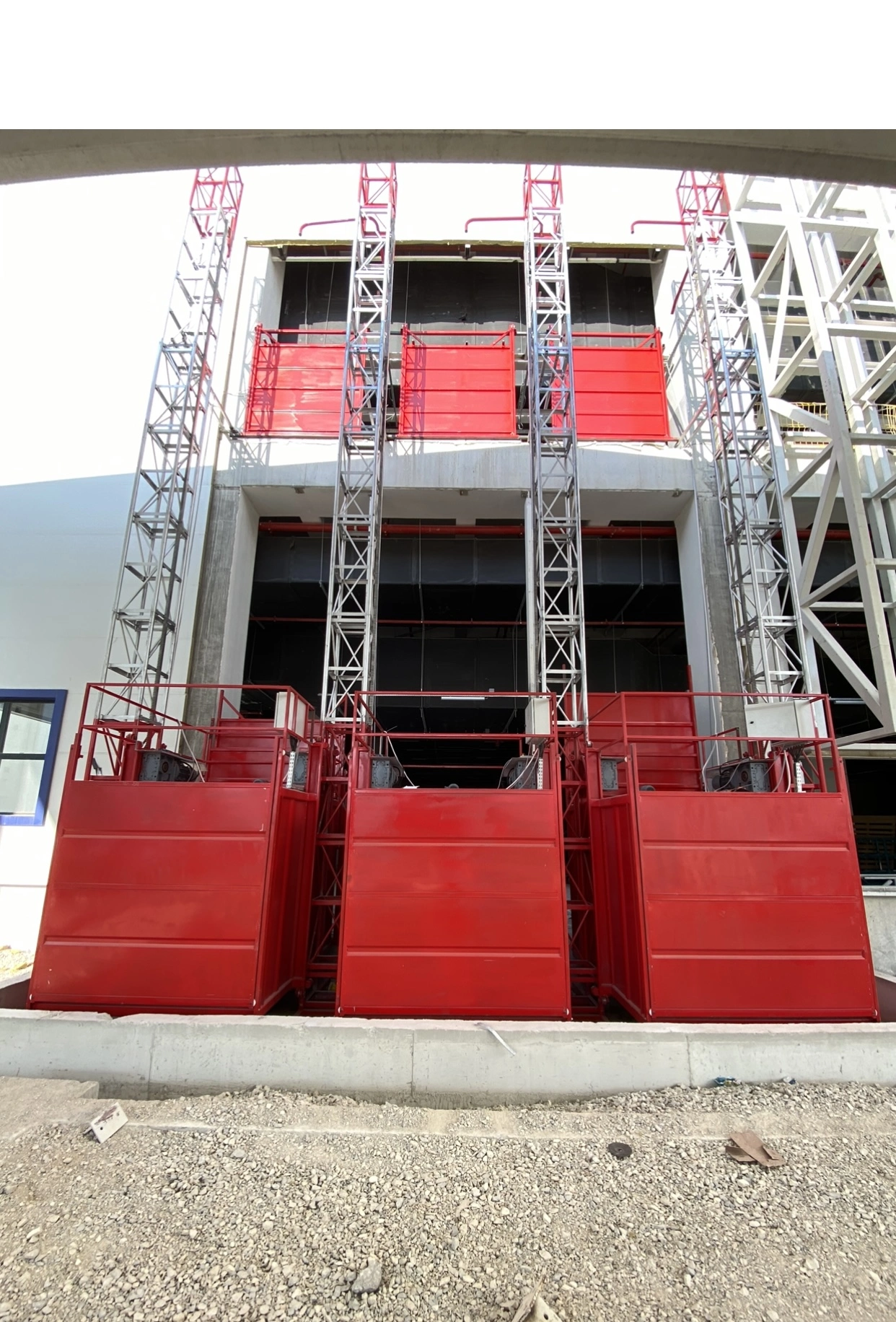
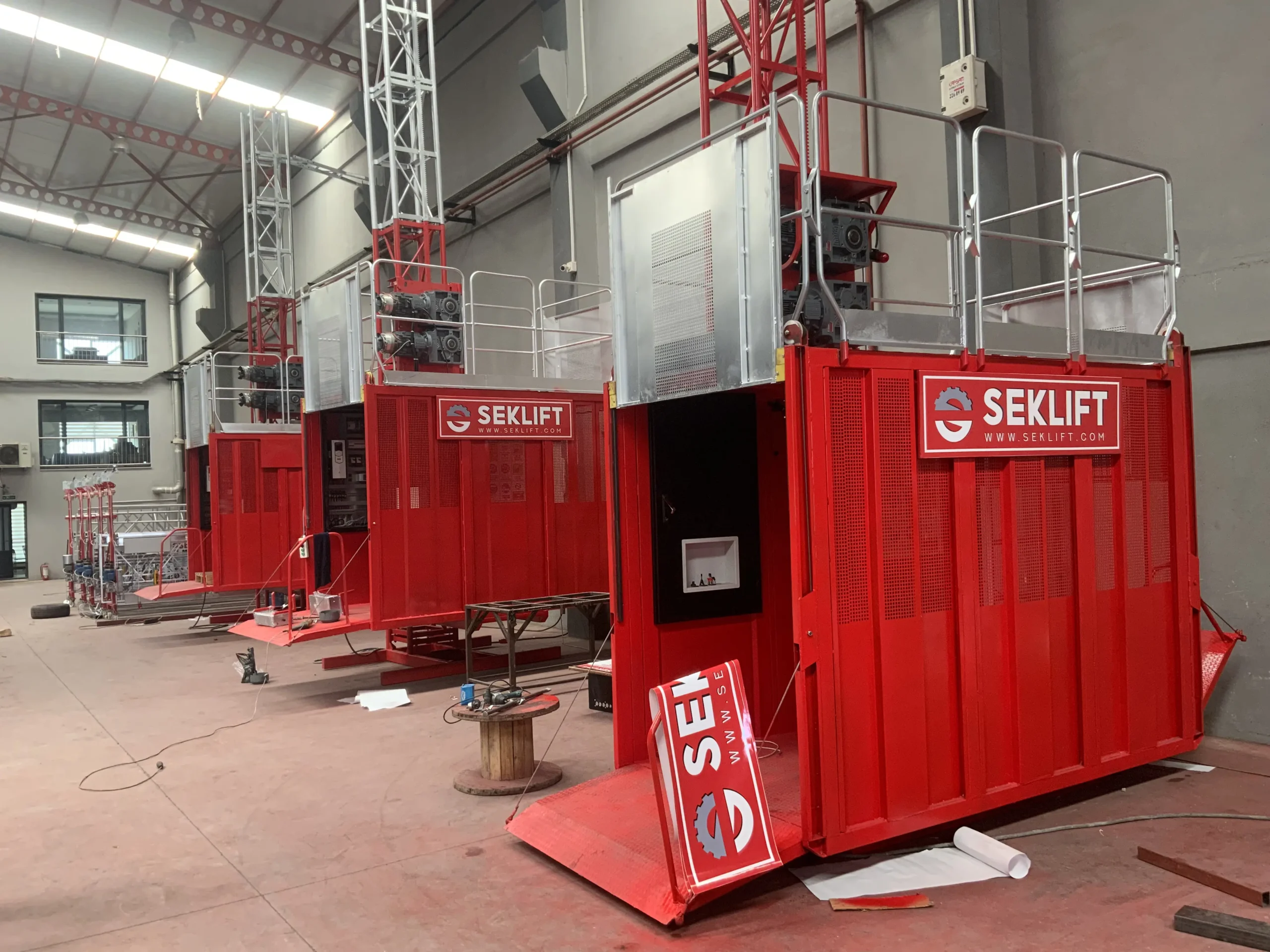
Construction-hoist boarding looks simple, but the interface between the moving car and the building is one of the most safety-critical parts of the installation. The exact arrangement varies by equipment and site, so the hoist manufacturer’s instructions, landing design and local rules must always take priority.
Where do you board and exit a construction hoist?
At ground level, users enter through the controlled base enclosure or designated access point. At upper floors, boarding and exiting takes place at purpose-built landings aligned with the hoist car.
Landings may interface with the building slab, a scaffold edge or a dedicated hoist platform. Government guidance from New South Wales notes that the hoist position and landing arrangement must account for the gap between the car and the landing, and that served floors require landing gates.
What should a safe landing include?
A safe landing is not just a flat platform. Its design must control the fall and movement hazards around the hoistway. Depending on the machine and jurisdiction, relevant features can include:
- A secure landing gate or barrier at each served floor
- Guarding around exposed edges and the hoistway
- A controlled gap between the car and the landing
- A ramp or bridging arrangement where specified by the hoist design
- A stable, slip-resistant walking surface suitable for site conditions
- Clear access without stored materials blocking the gate
- Sufficient lighting and visibility for loading and unloading
HSE guidance specifically emphasizes keeping landing gates closed except during loading and unloading, providing fencing where people could fall into the hoistway, controlling the platform-to-landing gap and securing transported loads.
Safe boarding procedure
- Wait for the hoist to stop fully at the designated landing.
- Confirm the landing is safe to use and that access has been released in the normal operating sequence.
- Allow exiting passengers or materials to clear before entering where practical.
- Enter without rushing or jumping the gap.
- Keep within the rated load and occupancy limits shown for the hoist.
- Close or secure the required car and landing gates according to the operating procedure before travel.
What should you consider inside the hoist car?
- Do not exceed the rated load or permitted number of persons.
- Distribute materials so they do not create unsafe point loading or instability.
- Secure loose loads that could move during travel.
- Keep doors, gates, controls and emergency-stop devices unobstructed.
- Do not lean through openings or interfere with safety devices.
- Do not ride a goods-only hoist as a passenger.
OSHA requires rated-load and operating information to be posted on hoists and sets separate requirements for personnel-hoist car gates/doors and emergency stopping. HSE likewise calls for loads to be evenly distributed and containers to be secured against unintended movement.
Safe disembarking and unloading
Exit only after the car has stopped at the intended landing and the access sequence permits the gate or door to be opened. Move people and materials in a controlled way, keeping the landing clear.
For bulky loads, the team should plan how the load will cross the landing interface before the trip begins. Do not pull or push material in a way that destabilizes the load, blocks the gate or creates a fall hazard at the landing edge.
Do you need a safety harness inside a construction hoist?
Not as a universal rule simply because you are inside a construction hoist. Required PPE depends on the site risk assessment, local regulations, the hoist configuration and the task being performed.
Hard hats, safety footwear and other site PPE may be mandatory under project rules. Fall-arrest equipment may be required when workers are exposed to a fall hazard—for example during erection, maintenance or certain landing activities—but it should not be described as automatically mandatory for every passenger standing inside a properly enclosed car.
What happens during a power failure or emergency?
There is no universal emergency-lowering method that applies to every construction hoist. Different machines use different braking, control and rescue arrangements.
In an abnormal event, passengers should follow the site emergency plan and the manufacturer’s instructions. Emergency lowering, brake release, evacuation or rescue should be carried out only by trained and authorized personnel using the procedure specified for that machine. Do not tell untrained users to manually release a brake or operate a hydraulic release unless the manufacturer’s documented procedure expressly requires it.
Operator and site responsibilities
Safe boarding depends on more than the person entering the car. The employer or site team must ensure the hoist is installed, inspected, maintained and operated in accordance with the applicable requirements. Operators should be competent for the equipment and should follow the manufacturer’s operating limits.
Routine pre-use checks, formal inspections, landing housekeeping and immediate reporting of damaged gates, abnormal noise or unsafe operation are all part of keeping the access system reliable.
Frequently asked questions
Can you board a construction hoist from any floor?
Only from a designated, properly installed landing that the hoist is intended to serve. Do not use an unfinished edge or improvised access point.
Should a landing gate stay open while waiting for the hoist?
No. Landing protection should remain in its safe closed state except when the operating sequence permits loading or unloading.
Can you enter while the hoist is still leveling?
No. Wait until the car has stopped and access is safely available.
Can materials be left loose inside the car?
Loads should be arranged and secured so they cannot shift dangerously during travel. Follow the manufacturer’s loading instructions and rated limits.
What should passengers do if the hoist stops unexpectedly?
Use the site communication/emergency procedure and wait for trained personnel. Do not attempt an improvised escape or manual brake release.
Send SEKLIFT your travel height, landing count, load, cage requirements and site drawings so the access arrangement can be reviewed from the start.
Compare construction hoist configurations →Technical references
This article is general safety information and does not replace site-specific procedures or manufacturer instructions.