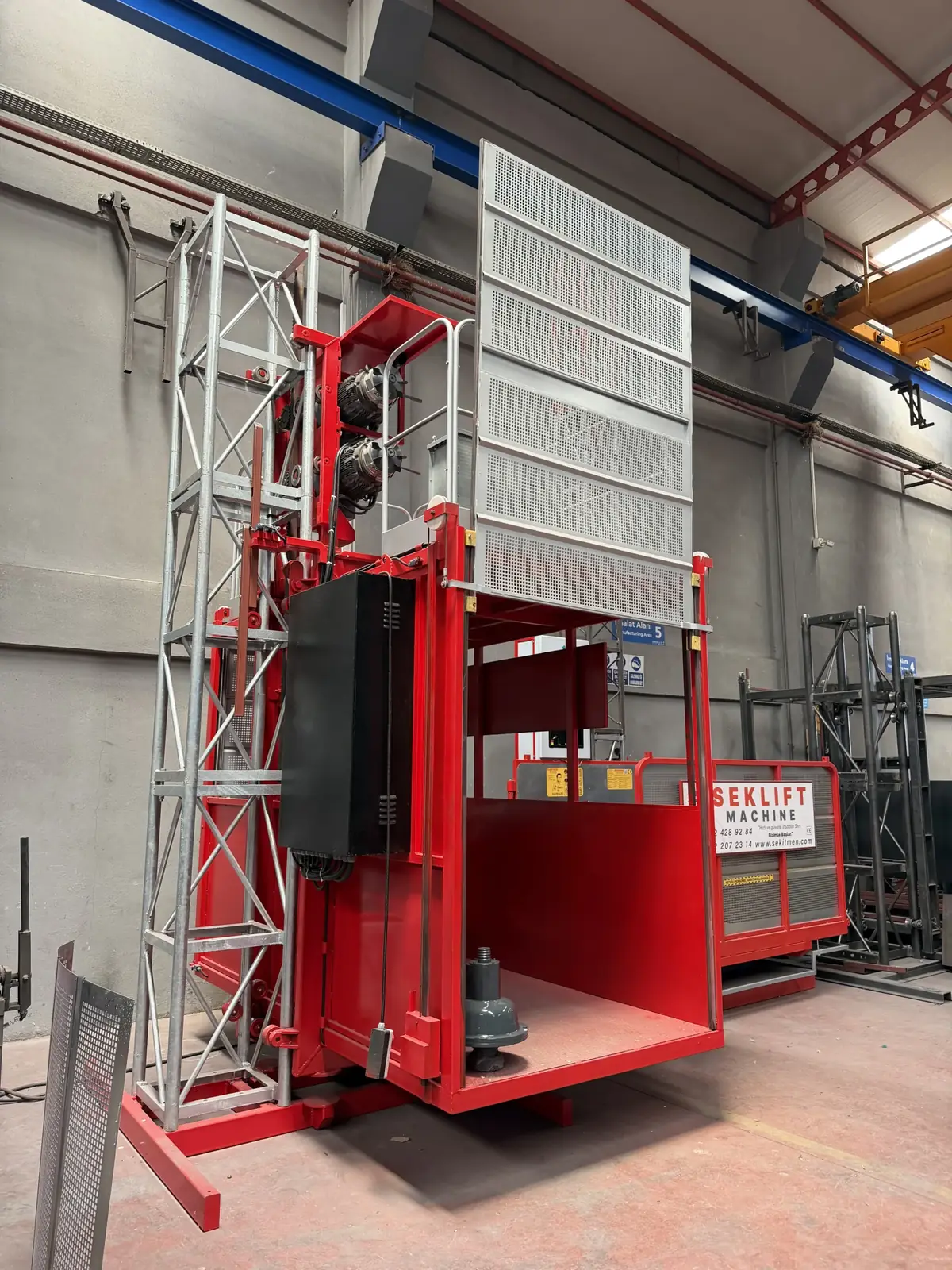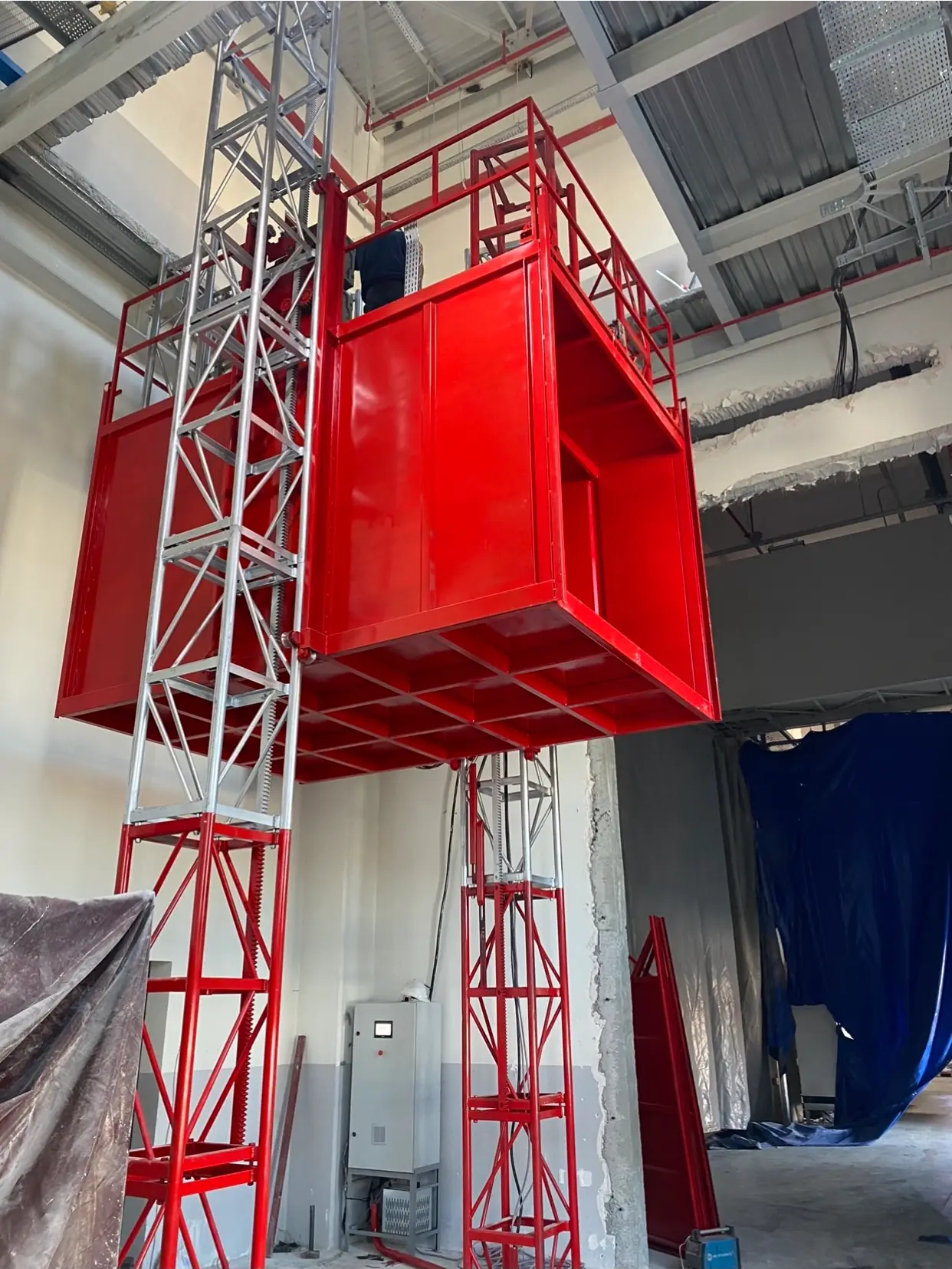
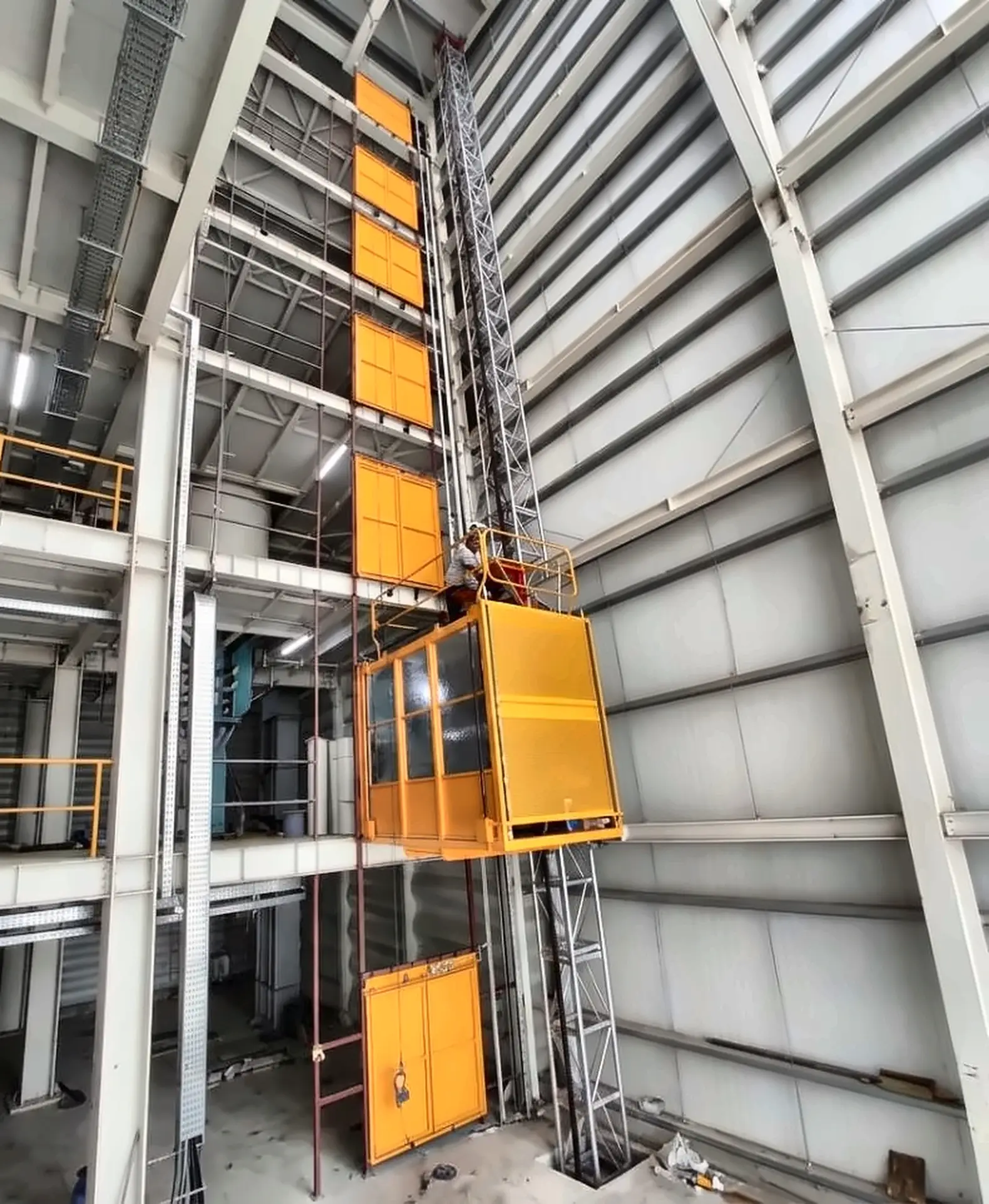
Which rules apply?
NR-18, the regulatory standard on safety in the construction industry, covers construction hoists in item 18.11 (Portaria SEPRT 3.733/2020). The former items 18.14.x have been revoked. NR-12 on the safety of machinery also applies, including its rules on maintenance records, plates and manuals.
Hoists must be designed by a legally qualified professional according to the national technical standards in force or, where no national standard exists, the international standards in force. Single-cable hoists, and hoists adapted with more than one cable, that do not meet the national technical standards may not be installed.
When is a hoist mandatory?
- From 10 m of building height: a motorised system for the vertical transport of materials
- From 24 m: at least one passenger hoist serving the full height of the building
- The passenger hoist must be installed by the time the structure reaches 15 m
Required safety devices
NR-18 lists minimum equipment and safety devices, including:
- Dual-channel, positive-break, monitored electrical interlocks that stop the cage when the cage door, roof hatch, ramp, base enclosure or any landing gate is open
- An emergency device against free fall that brakes the cage above the rated descent speed and cuts the power
- Upper and lower final limit interlocks, an anti-derailment device and buffers
- An overload device, a key lock against unauthorised use and an hour meter
- A plate showing the maximum number of passengers and the maximum load in kg
- Landing gates at least 1.8 m high, interlocked so that they open only when the cage is at that floor
On rack-and-pinion hoists, the top mast section must be fitted with the rack inverted or without a rack, so that the cage cannot run off the mast.
Documents the site must keep
- A preventive maintenance programme from the lessor, importer or manufacturer
- The technical handover document (termo de entrega técnica)
- An emergency-brake test report at most every 90 days, signed by the responsible professional
- Records of the operator’s daily pre-start checks
- Non-destructive test reports for the motor-brake and emergency-brake shafts
- The manufacturer’s manual and maintenance records under NR-12
- An earthing report signed by a legally qualified professional
Installation, maintenance and responsibility
Manufacturers, rental companies and installation or maintenance companies must be registered with the professional council and work under a legally qualified professional. Installation, assembly, dismantling and maintenance are carried out by trained staff with the company’s formal approval, with the work area isolated and never in adverse weather.
Engineering services are registered through an ART (Anotação de Responsabilidade Técnica) under federal law. Labour inspectors can interdict a hoist, or embargo all or part of the works, when they find a serious and imminent risk.
Operator training
Hoist operators need 16 hours of initial training and 4 hours of periodic training every year. Installation and maintenance teams also receive initial and annual training defined by the employer and compatible with the specific equipment.
Imported hoists
NR-18 does not set a separate approval procedure for imported hoists, but imported equipment must meet NR-12. That includes an instruction manual in Brazilian Portuguese supplied by the manufacturer or importer, and a plate with the importer’s details and professional registration number.
A Brazilian partner registered with the professional council is needed to install and maintain the hoist. EN 12159 certification supports the technical file, while compliance with the applicable Brazilian standard is assessed by the responsible professional.
Frequently asked questions
Is a construction hoist mandatory in Brazil?
Yes, from certain heights. NR-18 requires a motorised materials hoist from 10 m and at least one passenger hoist from 24 m, installed by the time the structure reaches 15 m.
How often must the emergency brake be tested?
NR-18 requires an emergency-brake test report at most every 90 days, signed by the responsible professional.
Are single-cable hoists allowed?
No. NR-18 prohibits single-cable hoists, and hoists adapted with more than one cable, that do not meet the national technical standards.
How much training does a hoist operator need?
16 hours of initial training and 4 hours of periodic training every year.
Compare SEKLIFT rack-and-pinion construction hoists, certified to EN 12159, and send your project details for a configuration review and quotation.
View construction hoist models →Sources
- NR-18: Safety and health at work in the construction industry, item 18.11 (consolidated text, Ministry of Labour and Employment)
- Portaria SEPRT 3.733/2020
- NR-12: Safety at work with machinery and equipment
- NR-3: Embargo and interdiction
- Law 6.496/1977 (Anotação de Responsabilidade Técnica)
This article summarises the regulations as of October 2026 and is not legal advice. Check the current text of NR-18 and NR-12 and consult the responsible professional for each project.